Part-time pay: why the bank number differs

Part-time pay looks simple right up until you reach for a calculator. Hourly rate, times hours in a shift, times shifts in the month, and you are done. Then the first payday arrives, you open your banking app, and that number is almost never the one sitting there.
Whether it came out higher or lower, there is a reason, and the reasons repeat. Part-time pay in Korea goes off-script at a small number of predictable points, and payroll questions arrive in the same order every time. So this is that order, one answer at a time.
- The three places a payslip can diverge from your own arithmetic.
- The conditions for weekly holiday pay and how to apply the formula yourself.
- A clear line between 3.3% withholding and social insurance, which are unrelated things.

Q. It is rate times hours, so why is my part-time pay different?
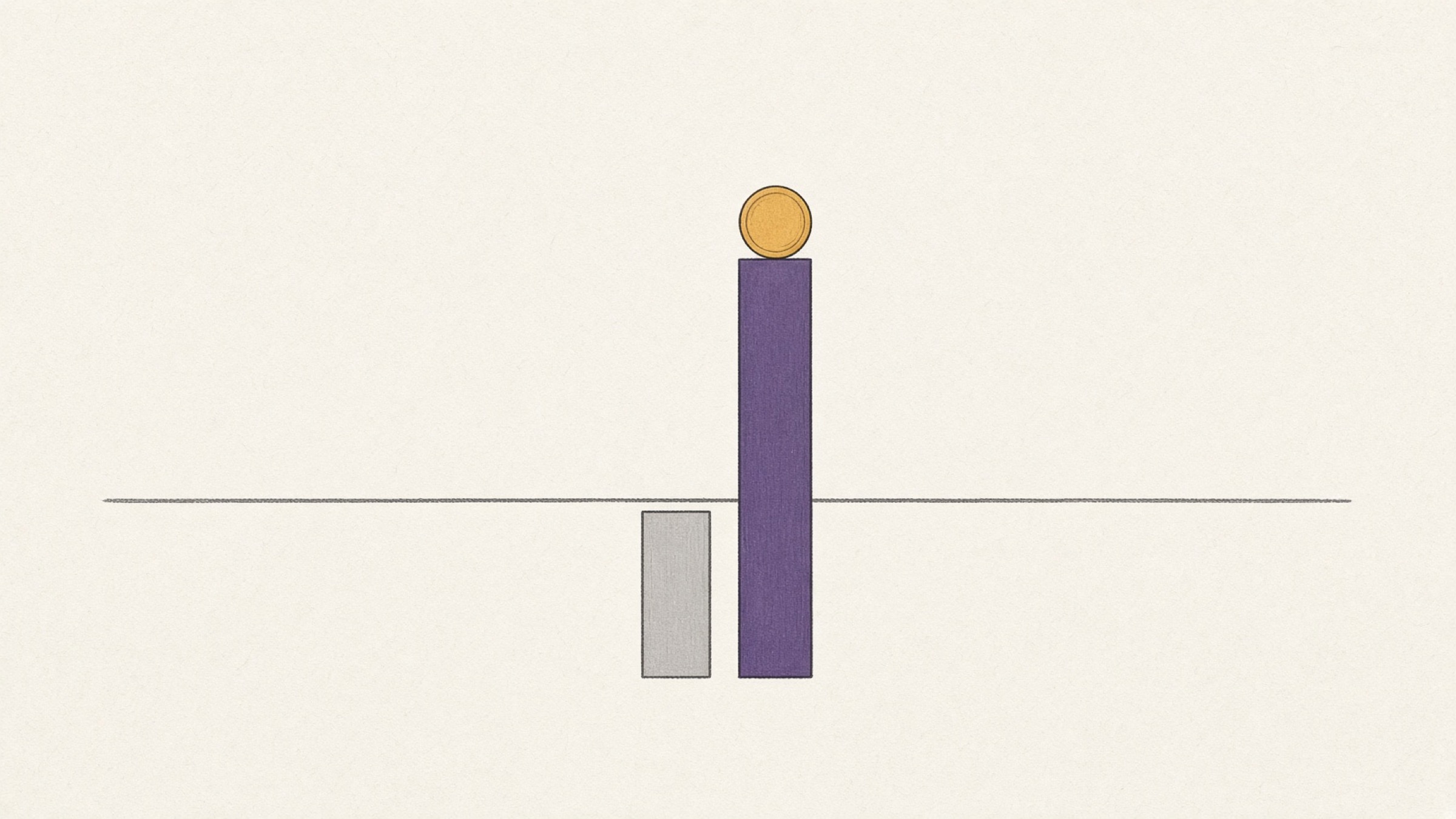
The arithmetic itself is rarely the problem. What the arithmetic cannot see is a pair of items sitting on either side of it. Weekly holiday pay is added above, and deductions are taken below.
Because the two pull in opposite directions, the result does not always tilt the same way. With weekly holiday pay and no deductions, you end up above the multiplication; with deductions and no weekly holiday pay, below it.
That is why two people on the same rate working the same hours can see very different part-time pay.
So the order in which you check is fixed too. Open your payslip and split it into two blocks, earnings and deductions, and the side your case diverged on becomes obvious at a glance.
Q. When does weekly holiday pay apply?
Weekly holiday pay is a Korean entitlement: wages for a day you did not work. It flows from the paid holiday set out in the Labor Standards Act, so it only arises in a week where the conditions were met.
There are three of them. Contractual working hours of 15 or more a week, full attendance on that week's scheduled days, and further work scheduled for the following week. Drop any one and that week produces nothing.
The hours that count are not the hours you actually worked but the hours your employment contract agreed to. Picking up a few extra hours during a busy week does not automatically carry you over the 15-hour line.
For a condition-by-condition breakdown with worked examples, see our guide to the three conditions.
To get the amount, multiply your hourly rate by (contractual weekly hours ÷ 40) × 8 hours, and the hours recognised are capped at 8 hours. Work beyond a 40-hour week and the holiday component still stops at one day's worth.
(20 ÷ 40) × 8 = 4 hours of holiday time, and applying the 2026 minimum wage of 10,320 won gives 41,280 won. A 30-hour week produces 6 hours, and a 40-hour week reaches the 8-hour cap.
Q. What is the 3.3% coming off my part-time pay?
3.3% is the withholding rate for business income in Korea. It is 3% income tax plus a local income tax of 0.3%, which is 10% of that income tax. The first thing to register is that this is tax, not an insurance contribution.
But the number tells you more than a rate. Being paid under 3.3% means the money was treated as business income rather than employment income. In other words, it is a signal that your contract type went one way rather than the other.
When 3.3% is the only deduction, the cash in hand does look bigger. The trade-off is that no employment insurance record builds up, and you may take on the obligation to file your own year-end income tax return the following May.
If you report at set hours, take instructions and work under supervision, yet are paid as business income, it is worth a second look.
What decides contract type is the reality of the working relationship rather than the label on the paperwork. When that is unclear, the Ministry of Employment and Labor helpline on 1350 is the accurate place to ask.
| Aspect | 3.3% withholding | Treated as employment income |
|---|---|---|
| Nature | Tax (3% income tax + 0.3% local income tax) | Income tax withheld per the simplified tax table |
| Premise | Paid as business income | Paid as a worker |
| Insurance deductions | None | Social insurance where enrolment criteria are met |
| Year-end | File a tax return the following May | Year-end tax settlement by the employer |
Q. Do part-timers pay social insurance too?
The label "part-timer" does not settle enrolment on its own. In Korea, the national pension, health insurance, employment insurance and industrial accident insurance each set their criteria under separate statutes.
Because the four are habitually spoken of as one bundle, it is easy to assume a single rule governs them. In practice, enrolment turns on contractual hours, working pattern and the employer's circumstances.
So two people on the same rate working the same hours can see different deductions coming out of their part-time pay. Rather than memorising rates, it is faster to read what is actually printed on your own payslip.
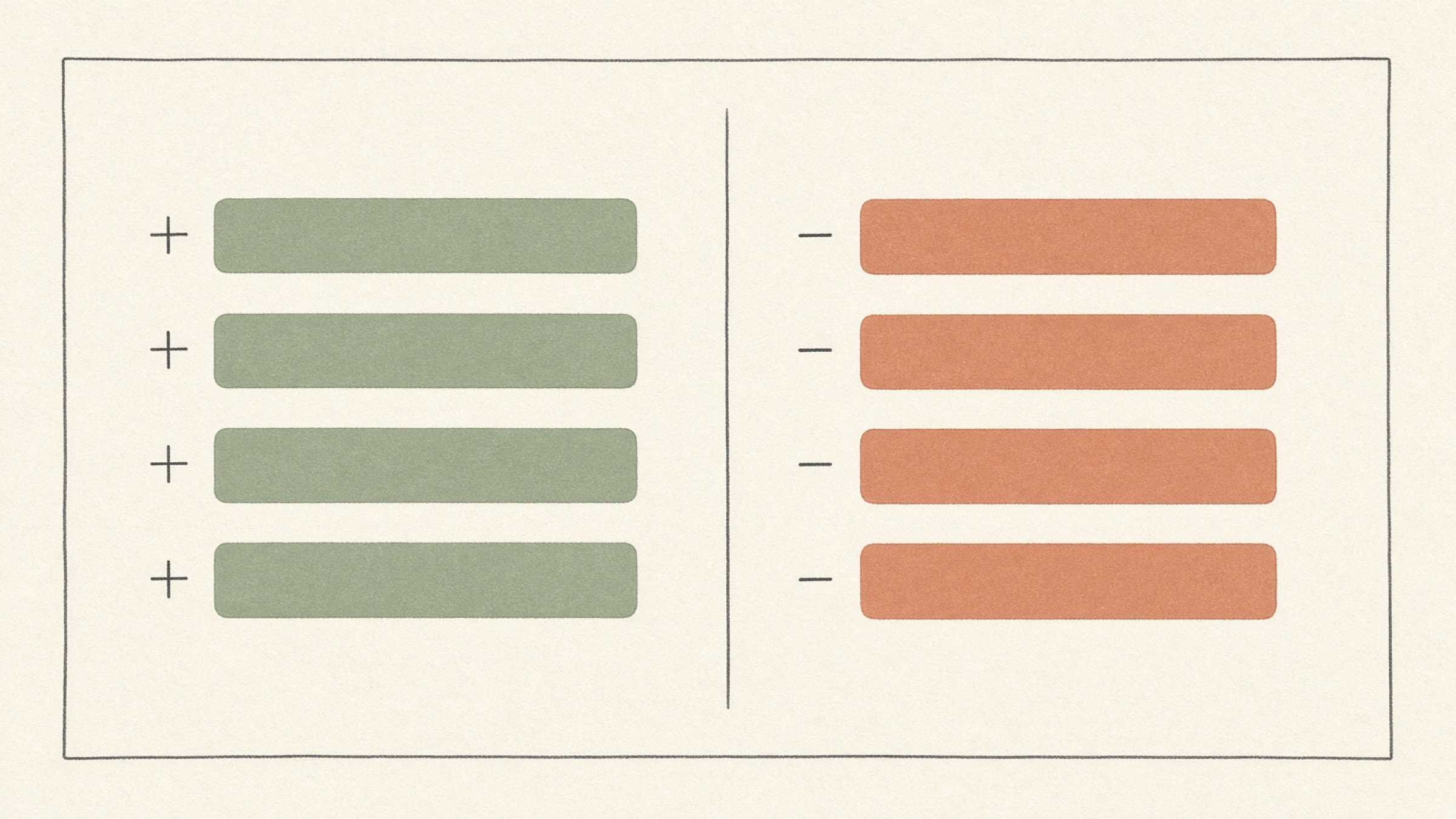
The payslip is not the only place to look, either. You can check your enrolment history directly with the National Pension Service, the National Health Insurance Service and the Korea Workers' Compensation and Welfare Service.
That catches both the case where a scheme is missing from your payslip but present in the agency records, and the reverse.
If a deduction line carries an unfamiliar name, or the amount swings sharply from month to month, ask your employer how it was calculated. Issuing a payslip is the employer's duty, so asking for the basis of each line is a reasonable request.
Q. So what is my part-time pay, exactly?
Everything above sorts the question into branches; the actual figure needs your own numbers in it. Put your hourly rate, daily hours and days per week into the part-time payroll calculator and you get an amount with weekly holiday pay included.
From there, switch the deduction method between social insurance and 3.3% to compare the two take-home figures side by side.
If it is only the holiday component you want, the weekly holiday pay calculator is quicker. Enter weekly hours and an hourly rate and it returns the amount, showing zero when you are under 15 hours. Both are free and run entirely in the browser.
- Before signing: first, whether contractual weekly hours sit above or below 15
- First payday: whether the earnings block has a weekly holiday pay line
- If 3.3% is the only deduction: check whether you were paid as business income
- Short-term or very short hours: cross-check deductions against agency records
References
- Labor Standards Act Article 55 (Holidays), Article 18 (Working Conditions of Part-Time Workers), Article 17 (Statement of Working Conditions). Korean Law Information Center
- Income Tax Act Article 129 (Withholding Tax Rates) and Local Tax Act Article 103-13 (Special Collection).
- Ministry of Employment and Labor notice of the 2026 minimum wage: 10,320 won per hour.
- Ministry of Employment and Labor customer helpline (1350), guidance on working conditions.