Weekly Holiday Pay - Do I Qualify?
Weekly holiday pay is the line that goes missing from a payslip more often than any other. Part-timers open their statement and find no such row at all; salaried staff stare at theirs wondering whether it is in there somewhere.
Neither situation resolves itself by looking harder, because a missing line does not always mean unpaid, and a present one is not always calculated correctly. The answer lives in three conditions, and working through them takes about five minutes.
- A verdict on whether you qualify, using the three conditions.
- The ability to calculate your own amount from your hours.
- A clear line through the common misreadings, such as lateness and 14.9-hour contracts.
Weekly holiday pay: do I qualify?
Weekly holiday pay is the wage attached to the paid holiday established by Article 55 of the Labor Standards Act. The idea is that someone who completes their scheduled week gets one day off with pay, and the wage for that paid day off is what we are talking about.
So the test comes down to these three. Miss any one of them and the week generates nothing.
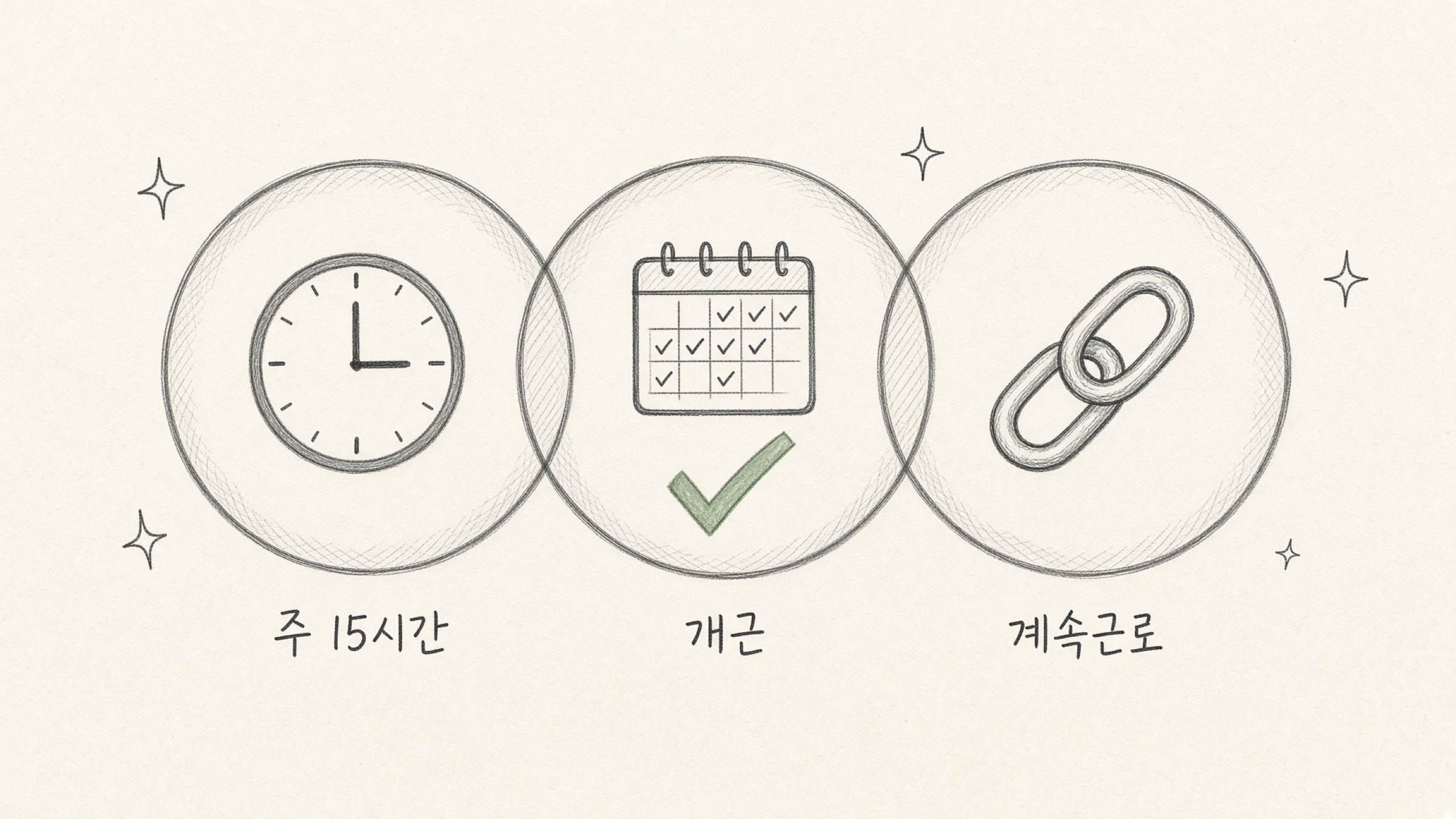
Contractual hours of 15 or more per week
The contractual weekly working hours set in your employment contract must be 15 or more. Article 18 of the Labor Standards Act disapplies the Article 55 holiday where the four-week average falls under 15 hours a week, so a 14-hour week generates nothing even with perfect attendance.
The easy thing to miss is that the measure is not hours actually worked but the hours agreed.
Full attendance on that week's scheduled days
You have to complete the scheduled working days without absence. Being absent for even one day for reasons attributable to you can remove that week's entitlement. Full attendance does not mean flawless punctuality, though, which is worth its own section below.
Continuing work: another week is scheduled
The entitlement arises, in principle, where you work one week and are scheduled to keep working the next. Resign right after completing a week, with no further work to come, and that final week may generate nothing. This trips up final-week settlements most often.
Why do all three have to be met?
Because each condition answers a different question. The 15 hours asks whether this person falls inside the scheme at all. Full attendance asks whether the right actually arose this week. Continuing work asks whether there is a following week to take off.
They sit at different levels, so none can stand in for another.
Which is why a 30-hour week with one absence pays nothing, and a perfectly attended 14-hour week was never in scope to begin with. When the line is missing from a payslip, identifying which of the three failed makes the conversation much shorter.
So how much is it?
Multiply the recognised holiday hours by your hourly rate. The hours are (contractual weekly hours ÷ 40) × 8, capped at 8 hours, one day's worth.

(20 ÷ 40) × 8 = 4 hours of holiday time, and applying the 2026 minimum wage of 10,320 won gives 41,280 won. A full-time 40-hour week hits the cap at 8 hours, which is a full day's wage.
Does being late cost me the entitlement?
This is the most common misreading. Full attendance is assessed by whether you were absent, so arriving late or leaving early on a day you did turn up to work is not absence. Lateness and early departure alone therefore do not wipe out that week's weekly holiday pay.
| Situation | Counts as full attendance? | Entitlement |
|---|---|---|
| Late or early departure (turned up that day) | Generally yes | Arises (though the missed time may be deducted from wages) |
| Absence (a day missed for your own reasons) | No | That week's entitlement may not arise |
| Annual or official leave | Generally not treated as absence | Treated as arising |
Keeping the entitlement and keeping the full wage are two different things, though. The time you missed by arriving late or leaving early can be deducted, and company rules of employment may handle it differently. If it is happening often, read your employment contract alongside those rules.
My contract says 14.9 hours. What is that about?
That number may not be an accident. No weekly holiday entitlement arises below 15 hours, so contracts that set contractual hours just under the line do exist. Splitting the work across several days so none crosses 15 hours is a variation on the same idea.
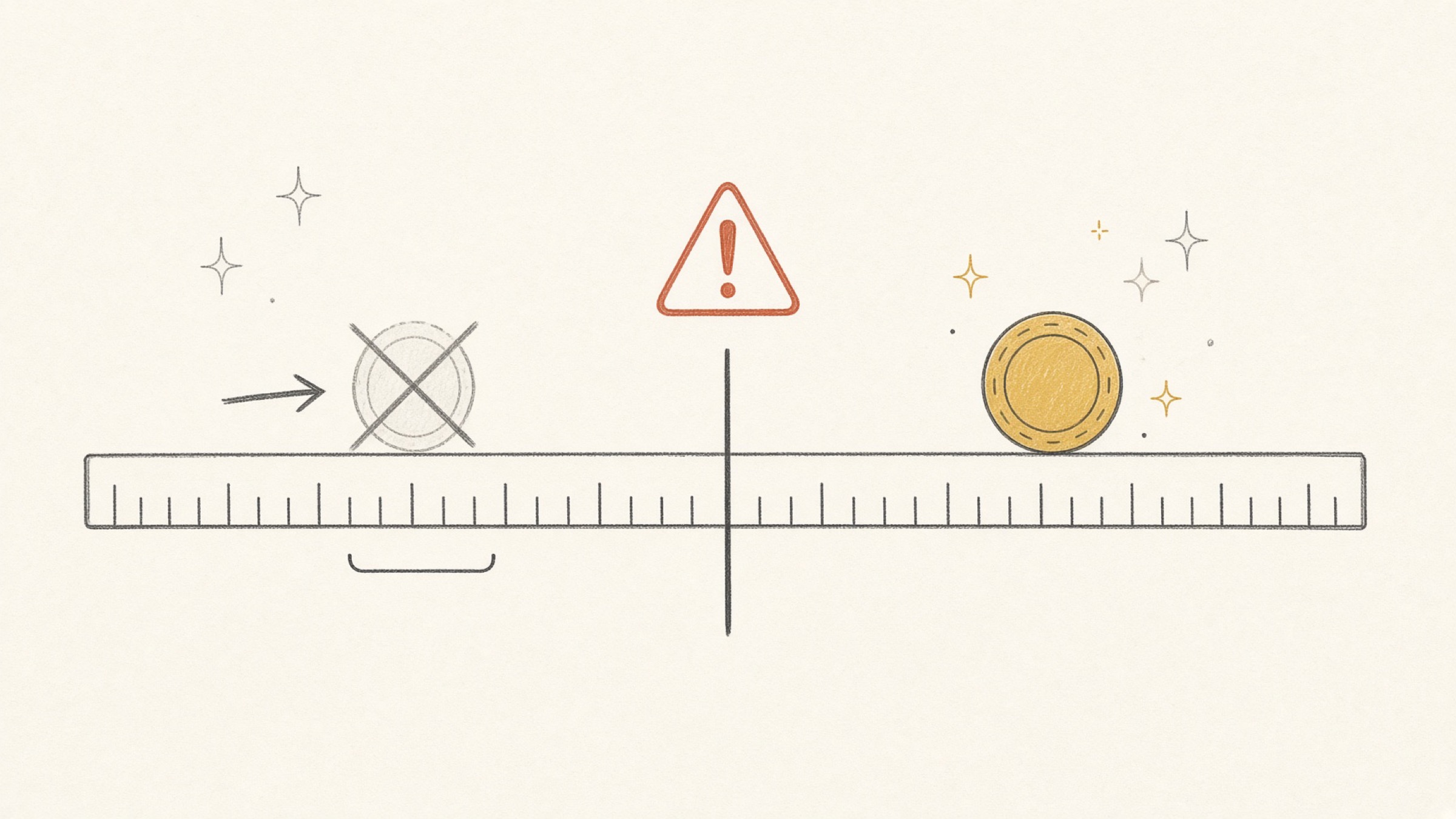
Whether that always leaves you worse off is harder to say flatly. If the number in the contract diverges from how the work is actually performed, the assessment can go the other way.
Establish what your real contractual hours are first, and if it stays unclear, the Ministry of Employment and Labor helpline (1350, no area code) is the accurate route.
What about salaried employees?
On a monthly salary this is usually already inside your pay. Rather than arriving as its own line the way it does for hourly staff, it is folded into the reference hours used to convert a salary into an hourly rate. That reference is 209 hours a month.
209 comes from a 40-hour week plus 8 paid holiday hours, giving 48, multiplied by the average number of weeks in a month, 4.345. (40 + 8) × 4.345 ≈ 209 hours. The 8 holiday hours are in there already.
Divide your monthly salary by 209 and you get your hourly ordinary wage, which is the basis for overtime, night, and holiday premiums.
Severance is calculated on average wages over the three months before leaving, and those wages carry the holiday component too, so knowing the 209-hour structure makes both figures easier to sanity-check. For exact amounts, use the Ministry's severance calculator or ask a certified labour attorney.
Shall we check what yours comes to?
Putting real numbers in settles it immediately. On an hourly contract, enter your weekly hours and rate into the Weekly Holiday Pay Calculator and it returns the amount, showing zero if you are under 15 hours.
To see salary, holiday pay, and tax together, the Part-time Payroll Calculator is easier, and on a monthly salary the Net Salary Calculator shows the figure after insurance and tax. All free, all in the browser.
- Hourly staff: no line on the payslip means finding which of the three conditions failed
- Short-hours and part-time: near the 15-hour line, real contractual hours are the crux
- About to leave: for the final week, check the continuing-work condition first
- Paying wages: calculating from the three conditions and 209 hours prevents disputes
References
- Labor Standards Act Article 55 (Holidays) and Article 18 (Working Conditions of Part-Time Workers). Korean Law Information Center
- Ministry of Employment and Labor, guidance on weekly holiday pay criteria. View the guidance
- Ministry of Employment and Labor notice of the 2026 minimum wage: 10,320 won per hour.