Where Did My Bonus Go? Bonus Net Pay Explained

The face people make when they first check their bonus net pay is remarkably consistent. The gap between the figure they were promised and the figure that landed in the account is wider than expected.
They had estimated it using the deduction ratio they see on an ordinary payslip, and far more than that is missing.
So the same line goes around the office: bonuses get taxed harder. That bonus net pay really does look stingy is not imagined — it happens. But the cause is a little different from the one everybody repeats.
- A structural explanation of why a bonus alone appears to lose so much.
- The ability to tell money taken early apart from your final burden.
- A test for whether your own burden genuinely went up.
The incident: the payslip does not match the estimate
Let us make the situation concrete. Someone whose ordinary monthly payslip shows a deduction ratio in the mid-teens receives a bonus. They ran the numbers expecting roughly the same ratio, and the amount that actually arrived is noticeably below that expectation.
Two readings part ways here. One says a different tax rate applies to bonuses. The other says the calculation method used at the moment of withholding is different. Office lore mostly runs with the first. The one closer to the actual structure is the second.

The principle: Korean income tax looks at a whole year at once
A bonus is not a separate category of income. In Korea it is earned income, and it goes into the same pocket as your salary. The tax levied on that pocket has two properties worth naming.
The first is that it is progressive. As income grows, the slices stacked on top meet higher brackets. Double your income and the tax does not double — it grows by more than that.
The second is that it is assessed by period. The unit that tax attaches to is not a month but a full year of income. Everything earned from January to December is added up, deductions are subtracted, and the rates are applied to what remains to fix that year's final tax.
The trouble is that employers do not pay bonuses on 31 December. Money has to go out while the year's final income is still unsettled, so the employer withholds an amount according to a fixed rule and pays the rest. That is withholding.
The concept: call it the withholding time gap
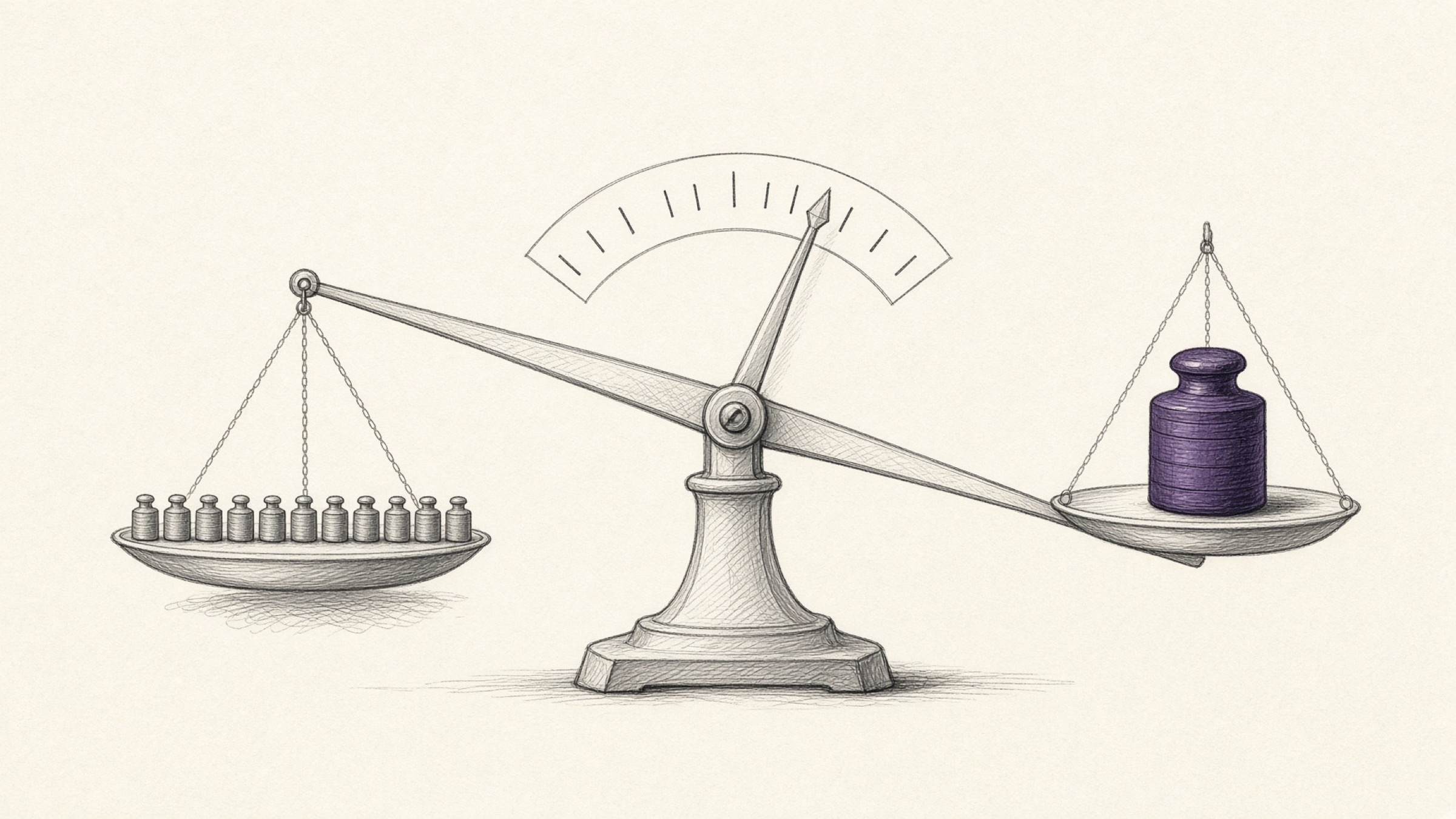
Let us give this structure a name for the rest of the article. The withholding time gap: the state in which the moment money leaves and the moment tax is fixed do not line up.
There is exactly one reason to name it. With the concept in hand you can finally separate "a lot was taken" from "a lot was borne".
Inside the withholding time gap two separate numbers exist. There is the amount withheld by the employer at payout, and there is the final tax fixed once the year is over.
They were never meant to be equal. The first is calculated by rule while the outcome is still unknown; the second is calculated once the outcome is fully known.
The procedure that reconciles the difference is the year-end tax settlement. Withheld too much and you get the excess back; withheld too little and you pay the shortfall. Which makes the deduction on a bonus payslip an interim receipt rather than a final bill.
Most of the feeling that bonus net pay is stingy comes out of this gap. At payout the year's income is unsettled, so the tax is taken by rule and in advance, and the final burden is reconciled later at the year-end settlement.
Read the payout-day deduction as if it were that year's tax burden and the numbers will not line up.
Applying it: why bonus net pay looks especially stingy
Now back to the opening incident. Why does the gap show up so sharply on a bonus in particular? Three things overlap.
One month's income suddenly swells
In the month a bonus lands, income can be several times the usual figure. Under a progressive structure the slices stacked on top meet higher brackets, so within the same year and the same person the ratio on the bonus portion comes out above the ratio on the salary portion.
Not because there is a bonus-only rate, but because of where the slice sits in the stack.
The benchmark is the salary deduction ratio
When people estimate bonus net pay, they reach for the deduction ratio from an ordinary month. But that ratio is a result already cushioned by the basic deductions.
No fresh cushion attaches to the bonus, so the perceived ratio jumps. The benchmark number itself is not a fair thing to compare against.
Korea's four social insurances attach differently
National Health Insurance and Employment Insurance are charged on remuneration that includes bonuses. The National Pension, by contrast, is charged monthly on a standard monthly income figure, so it is commonly not deducted separately when a bonus is paid.
Practice varies by employer, which is why two people receiving the same amount can see different deduction lines on their payslips.
Of the three, the first two are matters of timing and optical illusion. The third is a matter of real burden. Splitting them this way is what makes it clear what to look for on the payslip.
Objection: "surely the year-end settlement returns all of it?"
That is the reasonable pushback at this point in the argument. And it is half right.
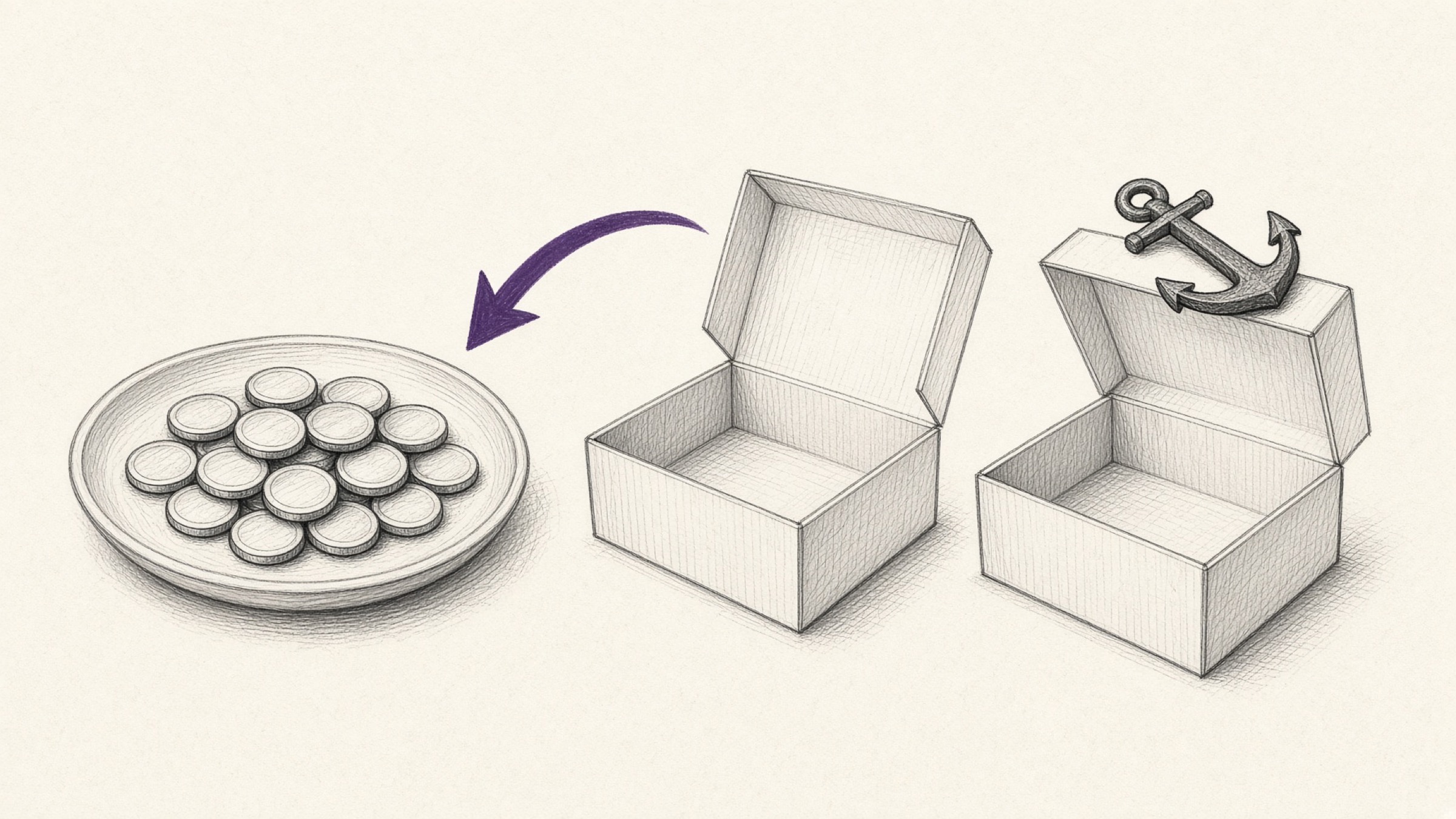
Here is the half that holds. If the amount withheld exceeded the final tax, the difference does come back. Even if a large sum left at payout because of the bonus, when the whole year is added up and the final tax turns out to be smaller, the settlement returns it.
Here is the half that fails. The bonus raised your income for the year. A larger income means a larger final tax. So what comes back is strictly the difference between what was withheld and the final tax, not the whole sum that left your bonus.
And if too little was withheld, you will owe more at settlement rather than receive anything.
| Category | What it is | What happens to it |
|---|---|---|
| The timing portion | The part of the amount withheld at payout that exceeds the final tax | Reconciled at the settlement |
| The real increase | The rise in final tax caused by the bonus enlarging the year's income | Remains after settlement |
| The insurance portion | Contributions charged on remuneration that includes bonuses | Follows each insurance's own basis |
"Does splitting the bonus into instalments cut the tax?"
The amount withheld at each payout can change. But if the instalments fall inside the same year they are added together at the settlement anyway, so the final tax does not shrink for that reason alone.
Where payment crosses into the next year the attribution year changes and the outcome can differ — though that turns on the timing of payment and on how the employer treats it.
"If the deduction looks wrong, is it the employer's mistake?"
Hard to say outright. The tax calculation for a bonus takes in a variable called the bonus coverage period, and the result also shifts with the number of dependants and the non-taxable items the employer applies.
A colleague on the same amount showing a different deduction is entirely ordinary. If a number will not add up, the fastest route is to ask payroll for the basis of the calculation.
The implication: so what should you look at?
Once you know about the withholding time gap, where you look on the payslip changes. Instead of flinching at a single deduction figure, you first sort which of the two numbers it is.
- Read the deduction lines one by one: income tax and insurance contributions differ in whether they get reconciled later
- Check the bonus coverage period: it feeds the bonus tax calculation, and it moves the result a lot
- Estimate against the year's total income: looked at on its own, a bonus always looks stingy
- Wait for the settlement before judging: the final burden is only fixed once the year-end settlement is done
The same logic applies at the negotiating table. Comparing bonus terms on gross figures alone makes for shaky judgement, because the money that reaches your hand on payday and the money that stays with you across the year are different numbers.
Want to check your own bonus net pay?
Putting real numbers in makes the structure click much faster. Enter the gross amount into the bonus net pay calculator and the after-deduction figure appears straight away.
Add your monthly salary, the bonus coverage period and the number of dependants, and the result switches to the calculation method in Article 195 of the Enforcement Decree of the Income Tax Act.
Health Insurance, Employment Insurance and the National Pension are the points where employers diverge, so each one is a toggle you can switch on or off. Put your payslip next to it, match the actual deduction lines, and you can see where the difference is coming from.
If you want the figure that stays in your account across a whole annual salary, the annual salary calculator is the right one, and for hourly work the part-time pay calculator is easier.
Either way the result is an estimate for reference only. For a confirmed figure, check with Korea's National Tax Service Hometax, your payroll department, or a tax professional.
References
- Enforcement Decree of the Income Tax Act, Article 195 (Calculation of tax on bonuses and similar payments). Korean Law Information Center
- Income Tax Act, Article 127 (Withholding obligation) and Article 137 (Year-end settlement of earned income tax). Korean Law Information Center
- National Tax Service Hometax, guidance on the year-end settlement of earned income. National Tax Service Hometax
- National Health Insurance Service, National Pension Service and Korea Workers' Compensation and Welfare Service, guidance on contribution bases.